Engineering
Hexapod minesweeper
A six-legged robot that walks where wheels can’t, and finds buried metal without putting a person in the minefield.
Scroll to build it
An estimated 110 million landmines are still in the ground. Hand-held detectors put the operator at risk, and wheeled or tracked robots get stuck on the first rock or slope.
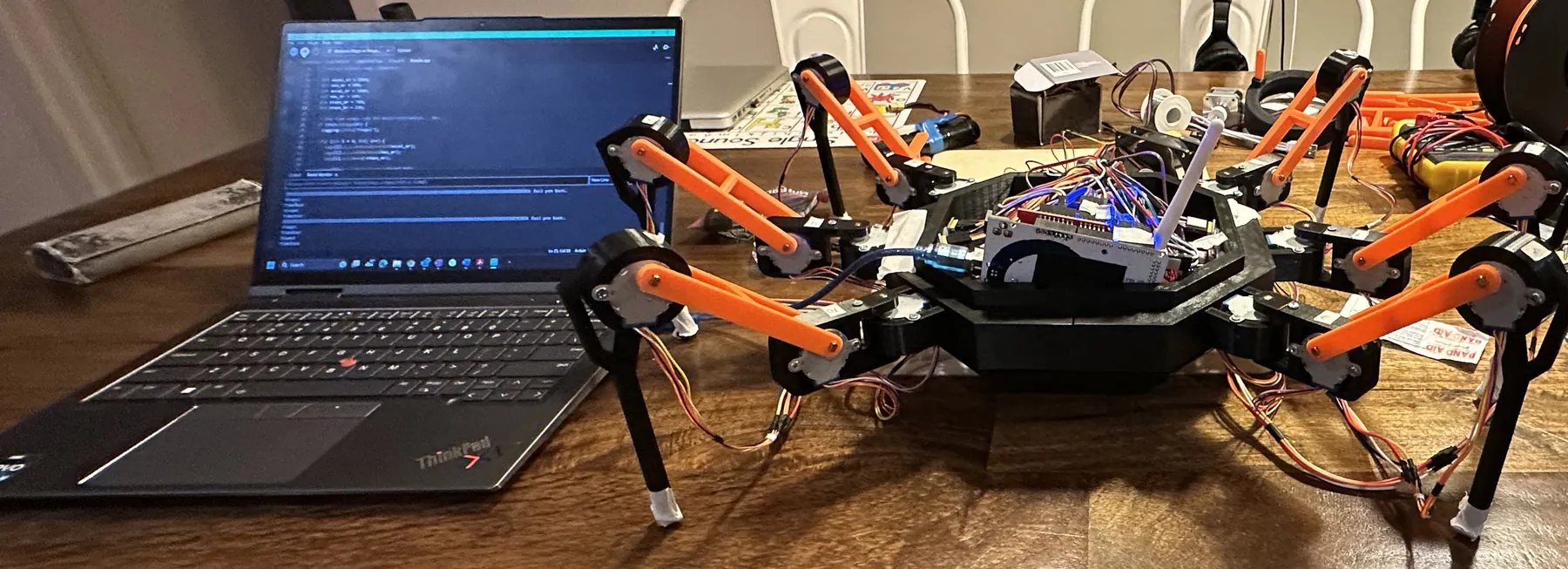
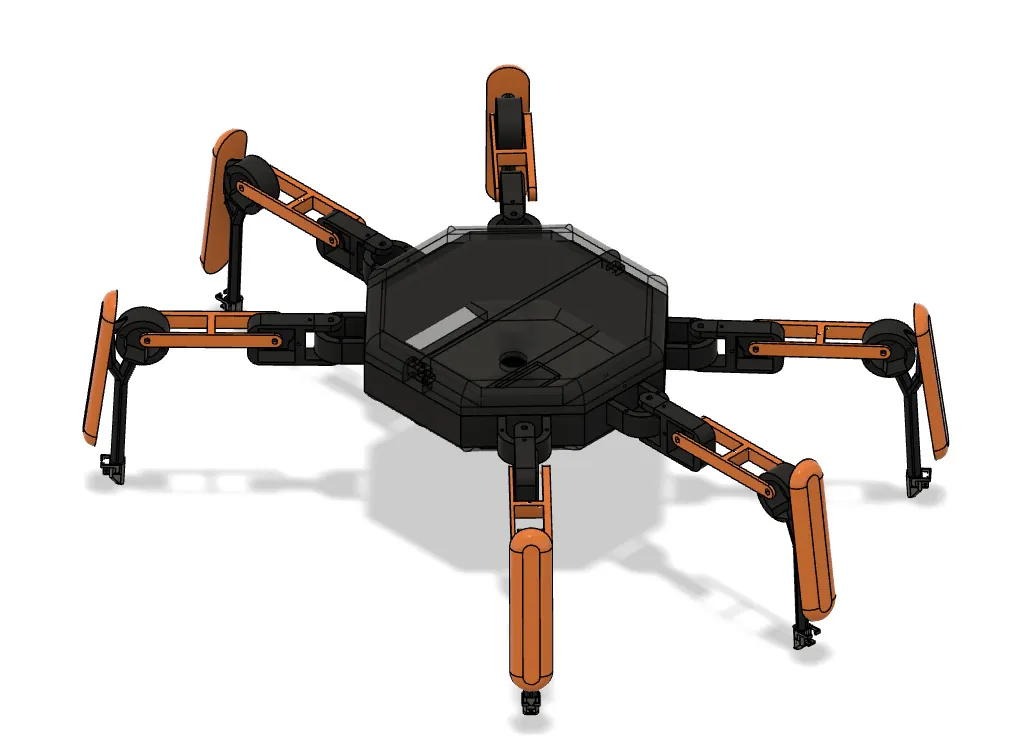
So I gave the robot legs. Six of them spread its weight over a wide area and let it step over uneven ground.
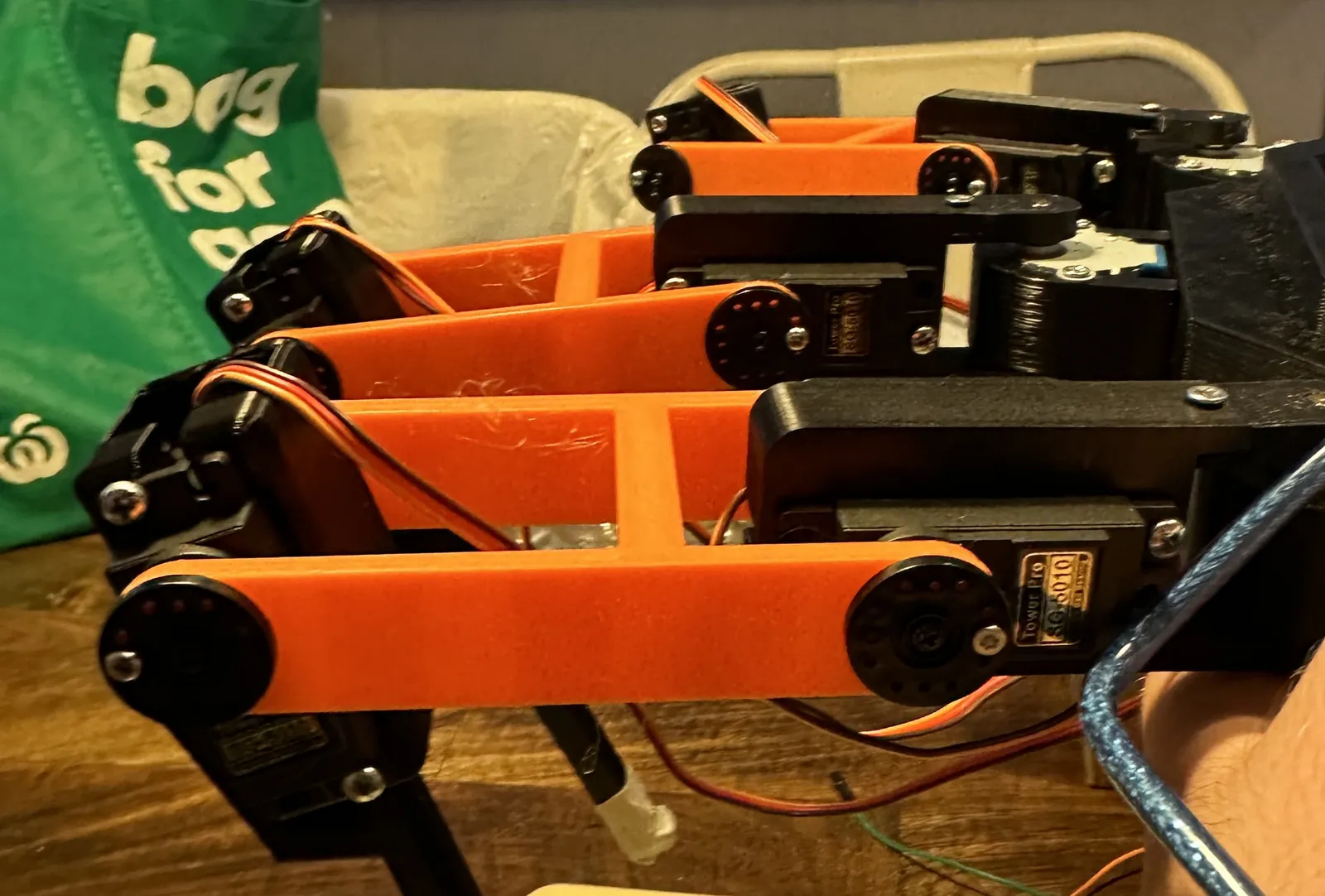
Each leg has three servos, so the robot has 18 joints to coordinate. The gait lifts one tripod of legs at a time, which keeps the body balanced while it moves.
Scroll and it takes a step with you.
The robot was my VCE Systems Engineering Units 3 and 4 project (study score 49) and was the feature project in issue 77 of DIYODE magazine. Read the article (archived copy).
I wrote a Python torque-balance simulation to work out how much force each joint needs for a given leg length and weight. It picked the servos for me, and showed that the NEMA 17 steppers I first planned to use would have needed a car battery.
The firmware is C++ I wrote from scratch. A small event system lets a new movement be described in about eight lines, and the walk cycle runs as a list of those events.
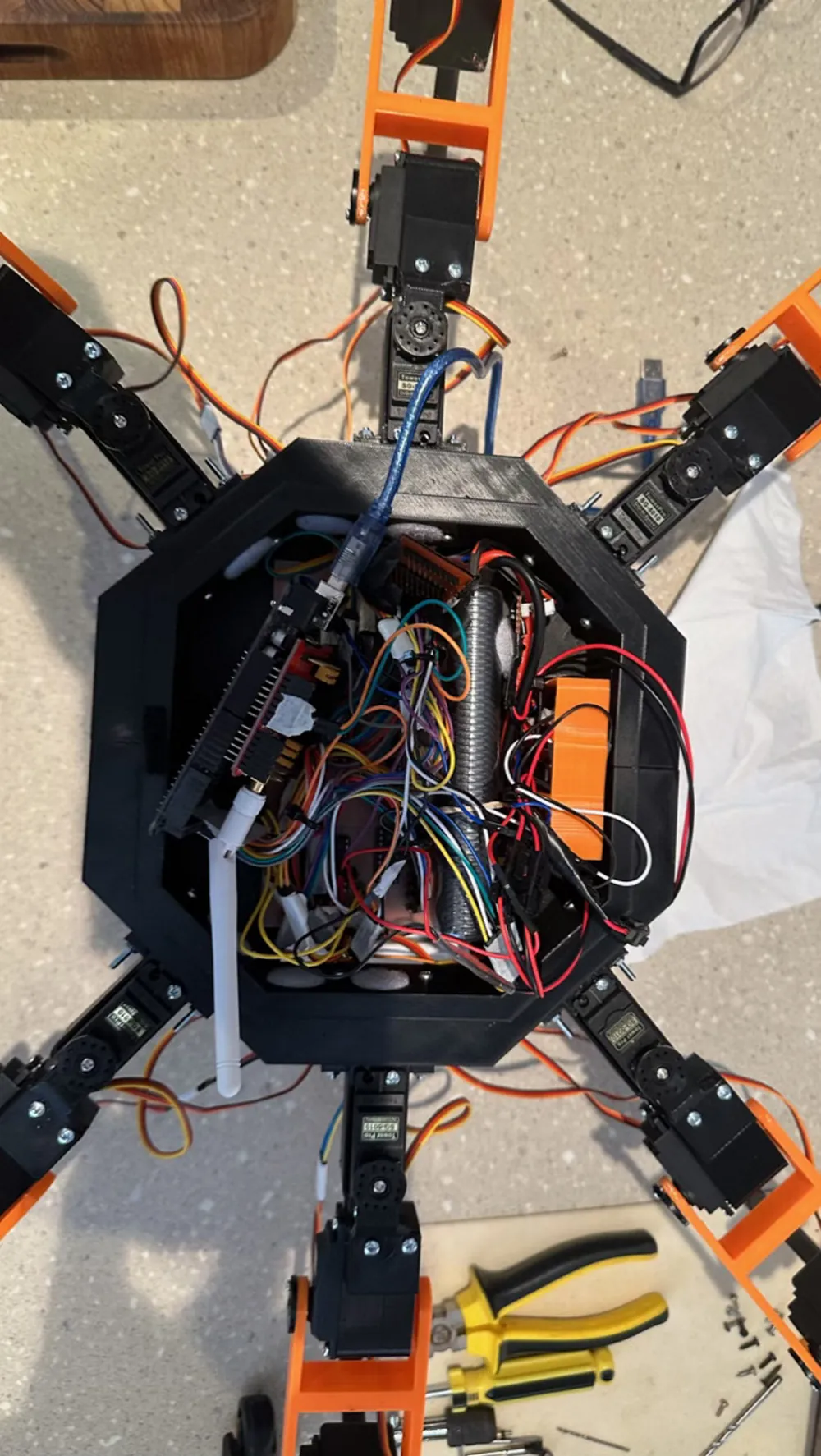
Two voltage regulators burnt out, and a pointer bug overran memory into the Arduino’s EEPROM. Fixing both taught me to sketch and review before I wire or write.
Steer the hexapod over rough ground and sweep its coil for buried metal. Three legs lift while three hold, and each foot lands on the ground beneath it.
Found 0 of 6
Animation is off because your device asks for reduced motion.
Click the ground, then use W A S D or the arrow keys, or hold the arrows on screen. A sandbox for trying the walk and the coil; the real robot took its commands over LoRa.
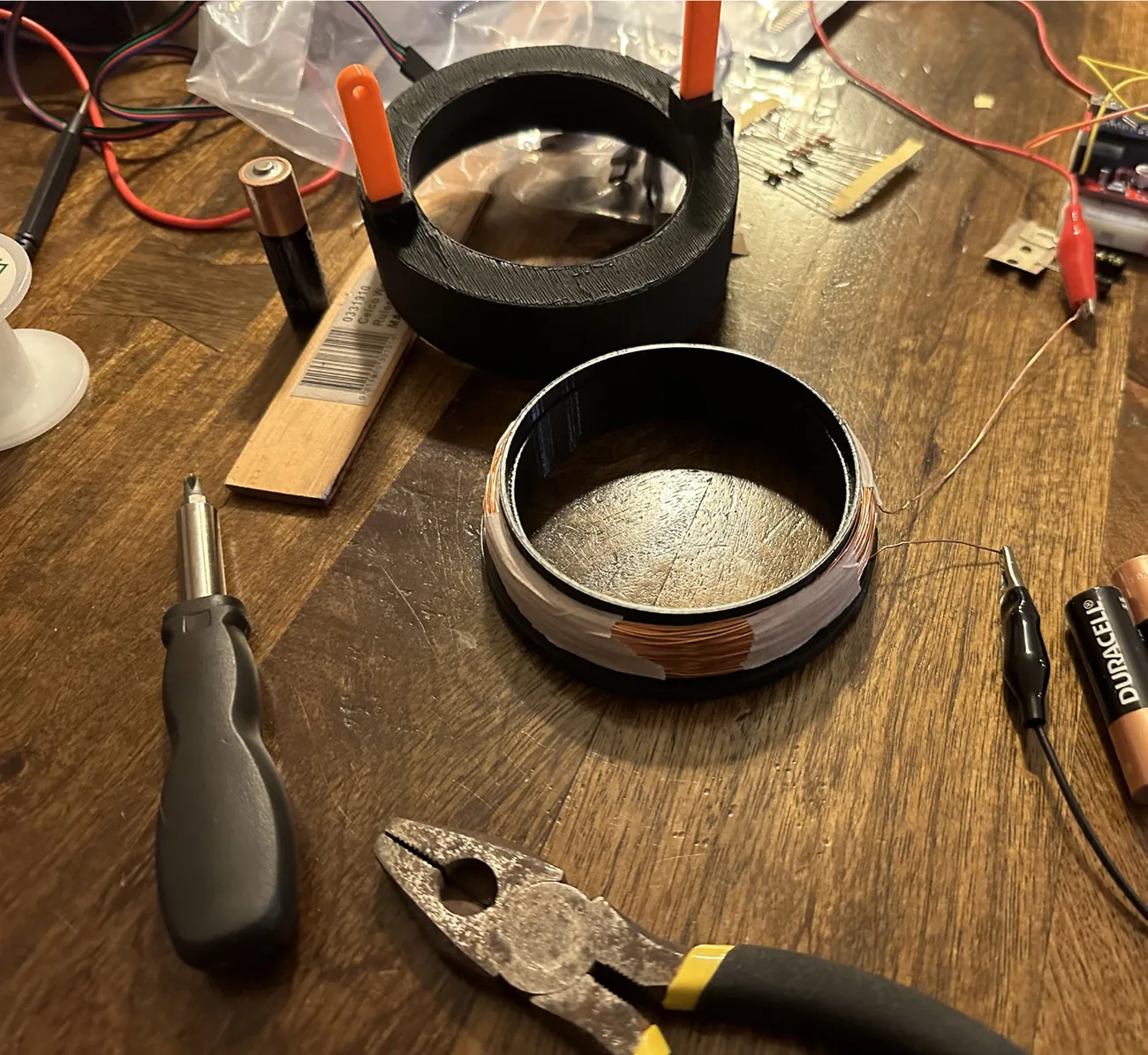
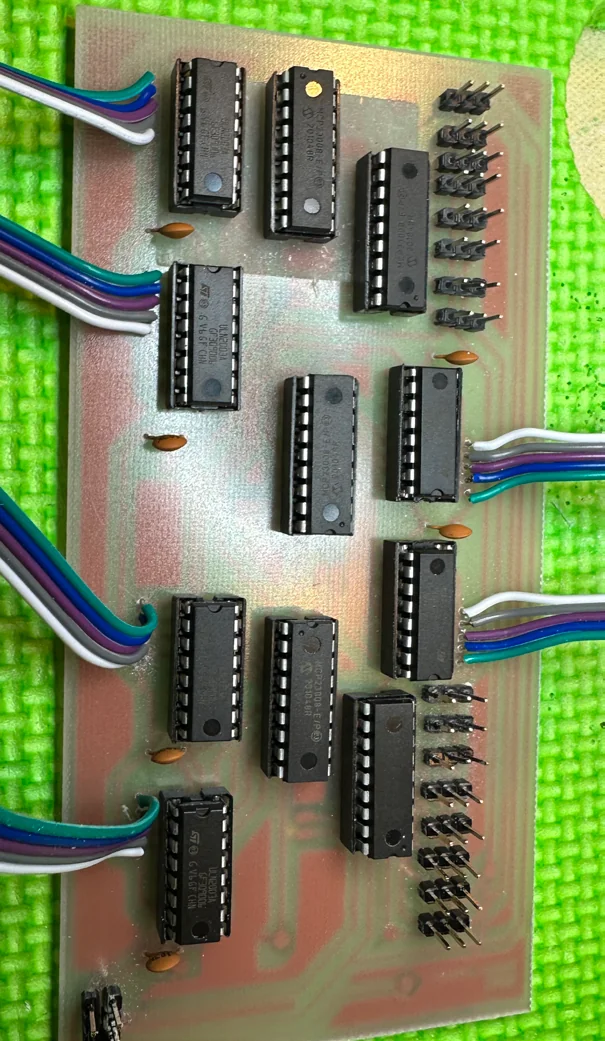
Printed legs, etched circuit boards and a lot of wiring. These are my own photos from the build.